Microbiome Research

Studying microbial communities to enhance sustainable food production and reduce environmental impact.

Research Overview

Our microbiome research focuses on understanding the complex microbial communities in agricultural systems to enhance sustainability and reduce environmental impact.

The lab specializes in studying the rumen microbiome in cattle, using advanced metagenomic and bioinformatic approaches to understand microbial functions and interactions. Our primary aim is to contribute to more sustainable agricultural practices by reducing greenhouse gas emissions and improving resource efficiency.

Through cutting-edge computational methods and laboratory techniques, we're exploring the potential of microbiome interventions to create more environmentally friendly food production systems while maintaining productivity.

SustainCattle

Our flagship project focused on mitigating methane emission and improving food security through microbiome approaches in cattle production.

View Project

Current Research Projects

Microbiome & Computational Biology Laboratory

Rumen Microbiome

Project 1: Rumen Hydrogen Sink Mechanisms
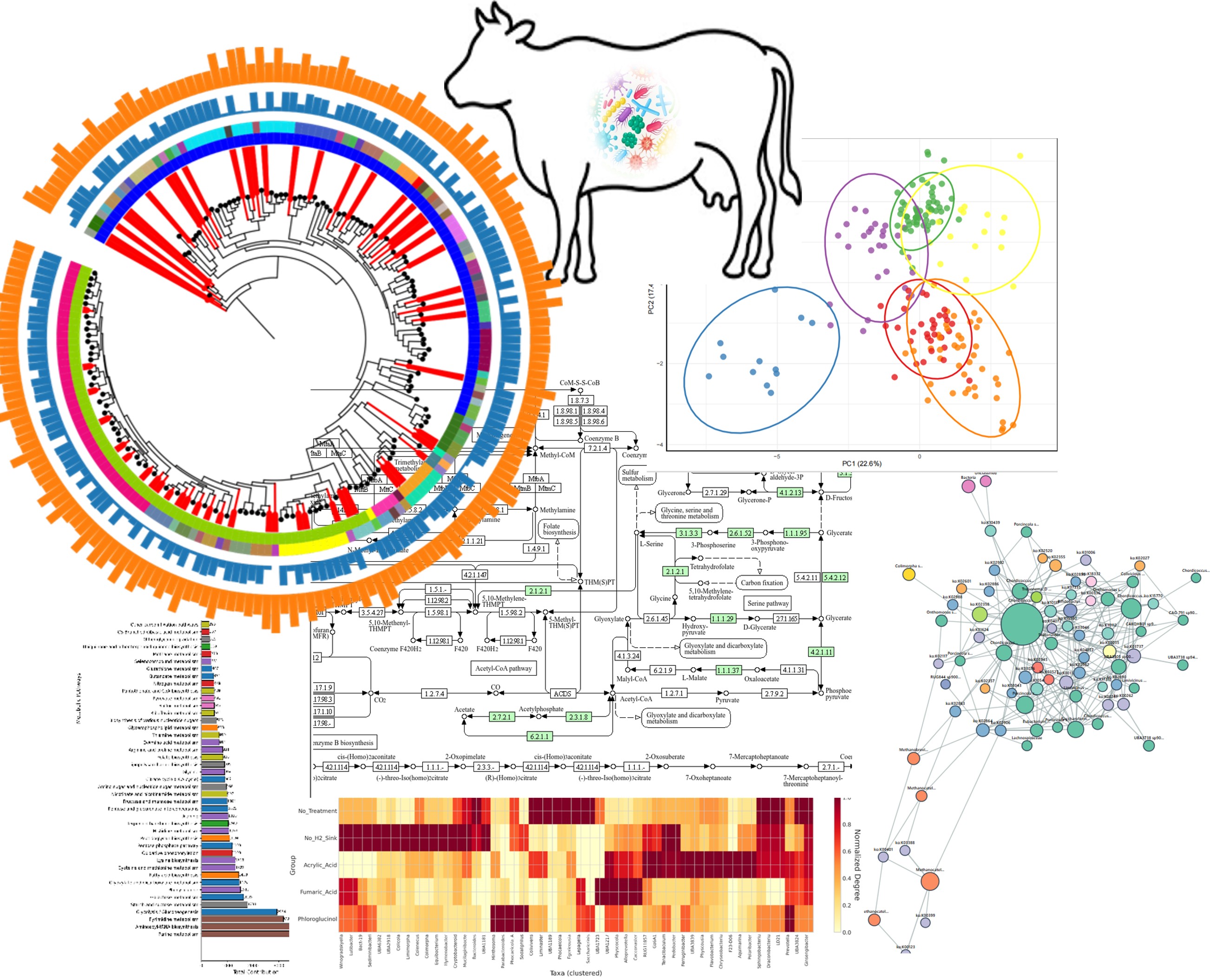
Rumen Microbiome Visualization

This project investigates alternative hydrogen pathways in the rumen microbiome when methane production is inhibited. Using a carefully designed experimental approach with Holstein dairy cattle, we're studying how the rumen microbial community adapts to different conditions.

  • Multi-omics analysis of microbiome adaptation
  • Testing of novel compounds for environmental impact
  • Controlled experimental design with Holstein cows
  • Comprehensive metagenomic and metatranscriptomic analysis

MetaMAG Explorer

Project 2: MetaMAG Explorer Pipeline
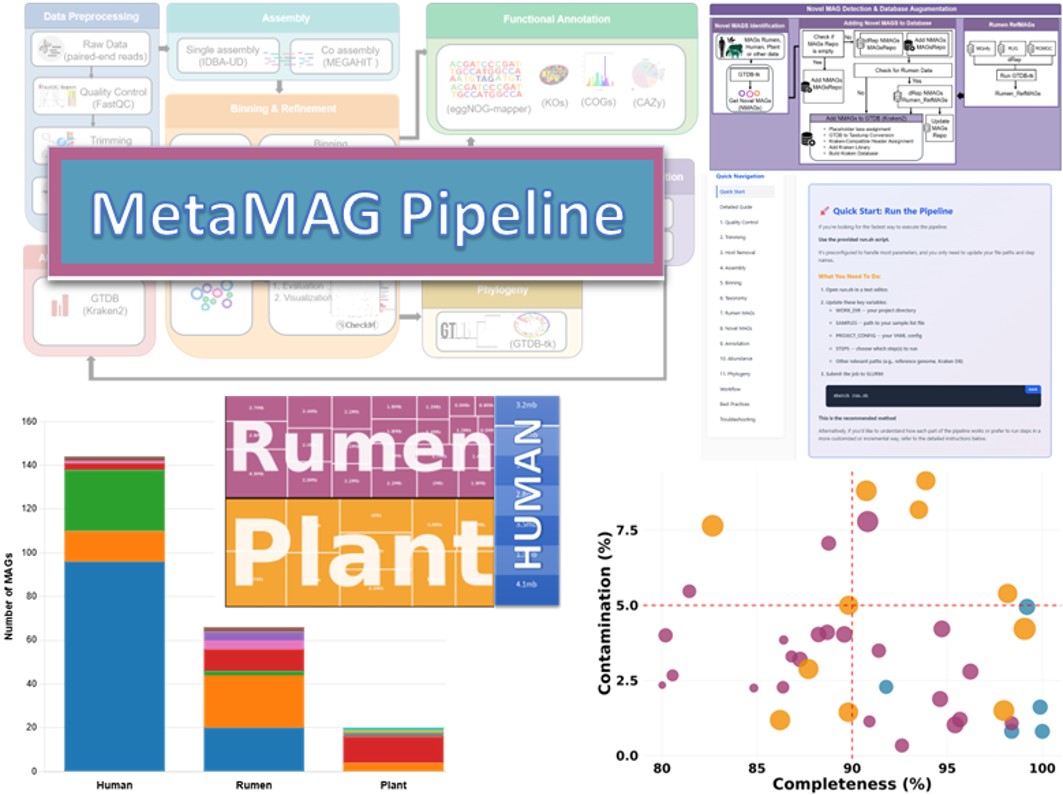
MetaMAG Pipeline

We're developing a computational pipeline for the discovery and validation of novel microbial genomes from metagenomic data. This tool enhances reference databases to improve microbiome analysis across different environments.

  • Novel microbial genome discovery workflow
  • Database enhancement for improved microbiome analysis
  • Validation across diverse ecosystems (Human, Rumen, Plant)
  • Integration of multiple bioinformatics tools into a unified pipeline

Our Research Approach

Advanced Metagenomics

We employ cutting-edge metagenomic sequencing and analysis techniques to characterize complex microbial communities in various environments, with a focus on rumen microbiomes.

Multi-Omics Integration

Our research integrates multiple omics data types (genomics, transcriptomics, metabolomics) to gain a comprehensive understanding of microbial functions and interactions.

Computational Biology

We develop and apply innovative computational methods to analyze and interpret complex biological data, enabling discoveries that would be impossible with traditional approaches.

"Understanding microbial communities is key to developing sustainable food production systems. Our microbiome research reveals the hidden players that can help address both environmental and food security challenges."

- Dr. Zexi Cai, Associate Professor

Related Publications

Manuscripts in preparation for peer-reviewed journals

Research findings from our current projects are being compiled for publication. Updates will be posted as manuscripts become available.

2025 Mar 11

Network analyses unraveled the complex interactions in the rumen microbiota associated with methane emission in dairy cattle

Animal Microbiome

Network analyses provided a comprehensive understanding of the microbiota-methane emission relationship, serving as an innovative approach for microbiota-phenotype association studies in cattle. Our findings underscore the importance of microbiota-trait and microbiota-microbiota associations related to methane emission in dairy cattle, contributing to a systematic understanding of methane production in cattle. This research offers key information on microbial management for mitigating environmental impact on the cattle population.

2025 Nov 10

The crosstalk between host and rumen microbiome in cattle: insights from multi-omics approaches and genome-wide association studies

World Journal of Microbiology and Biotechnology

This review synthesizes emerging insights into the genetic and functional profile of the rumen microbiome. Meanwhile, association studies with microbiome and genome-wide markers have identified key microbial and genetic markers linked to methane emissions, paving the way for microbiome-driven breeding programs aimed at reducing environmental impacts. This review also addresses challenges in integrating microbiome datasets, bioinformatics workflows, and reference databases, offering strategies to overcome these obstacles through multi-omics and advanced computational tools. By highlighting actionable pathways for microbiome-informed breeding and management strategies, this work provides a novel framework for improving livestock productivity and mitigating environmental footprints.

2025 Apr 22

Sequence-based genome-wide association study reveals host genomic regions and candidate genes influencing the fecal microbiota of Holstein cows

Journal of Dairy Science

The study represents a significant step forward in understanding the genetic determinism of the complex interactions between the fecal microbiota and their host. It provides new insights into the biological mechanisms underlying host-microbiota interaction in dairy cattle and unveils strong associations between host genomic regions and fecal microbiota in a commercial population. This study holds promise for large-scale breeding strategies to shape the fecal microbiota in Holstein cows and benefit from the host-microbiota interactions.

Interested in Our Microbiome Research?

Contact us to learn more about our research projects, potential collaborations, or opportunities to join our team.